What Is Stroke Rehabilitation?
Stroke rehabilitation is a process that helps people recover after a stroke. A stroke happens when blood flow to the brain is blocked or reduced. Because of this, parts of the brain can get damaged. Stroke rehabilitation uses special exercises and therapies to help people regain lost skills. For example, it can help with walking, talking, or using the hands again. Often, a team of experts, including physiotherapists, guides this process. The main goal is to help people become as independent as possible.
Common Effects of Stroke on Movement and Independence
After a stroke, many people notice changes in their bodies. These changes can make daily life harder. However, with the right support, many people improve over time. Common effects include:
Because of these effects, some people need help with daily activities. For instance, getting dressed or eating may become difficult. Yet, stroke rehabilitation aims to improve these skills.
Role of Physiotherapy in Stroke Recovery
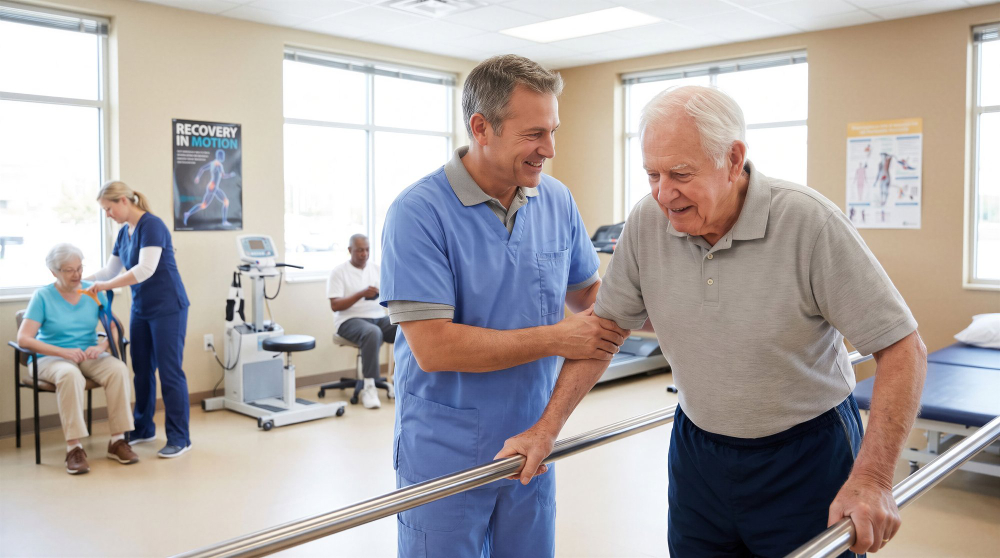
Physiotherapy after stroke is a key part of recovery. Physiotherapists are experts in movement and exercise. They assess each person’s needs and create a plan. This plan may focus on strength, balance, and coordination. In addition, physiotherapists teach safe ways to move and prevent falls. They also help people practice daily tasks. Over time, these steps can boost confidence and independence. According to the World Health Organization, early rehabilitation can lead to better outcomes.
Key Physiotherapy Techniques for Stroke Rehabilitation
There are many ways physiotherapists help people regain mobility after stroke. Some common stroke recovery exercises and techniques include:
Because every stroke is different, physiotherapists adjust these techniques for each person. As a result, recovery plans are unique and personal.
Benefits of Early and Ongoing Physiotherapy
Starting physiotherapy soon after a stroke can make a big difference. Early movement helps prevent muscle loss and joint stiffness. In addition, ongoing therapy supports long-term progress. Some key benefits include:
Because of these benefits, experts recommend regular physiotherapy for stroke survivors. The Centers for Disease Control and Prevention also highlight the value of early rehabilitation.
Tips for Supporting Recovery at Home
Even after leaving the hospital, recovery continues at home. Family and friends play an important role. Here are some tips for improving independence post-stroke:
Because recovery can be slow, patience and support are important. Over time, many people see steady progress.
Preventing Complications After Stroke
After a stroke, some people face extra health risks. However, there are steps to lower these risks. Common complications include:
To help prevent these problems:
Because prevention is key, regular check-ups and ongoing physiotherapy help keep people safe and healthy after stroke.